EIFS Siding: What Every Homeowner Should Know
Understanding Exterior Insulation and Finish Systems, synthetic stucco, common moisture concerns, and what home inspectors look for during a home inspection.
SDM Home Inspections • Inspect • Inform • Protect
What Is EIFS?
EIFS stands for Exterior Insulation and Finish System. It is often called synthetic stucco because it can look similar to traditional stucco from the street, but it is actually a layered exterior wall system with foam insulation beneath the finish.
EIFS can be attractive, energy efficient, and durable when installed and maintained correctly. The main concern is moisture management: water needs to be kept out where possible and allowed to drain out when it gets behind the exterior finish.
Northern California Note
In Chico, Paradise, Oroville, Durham, and the surrounding North State, EIFS is less common than wood, fiber cement, and traditional stucco siding, but it is still found on many homes and remodels. Seasonal rain, heat, and temperature swings make exterior moisture details especially important.
EIFS System Overview
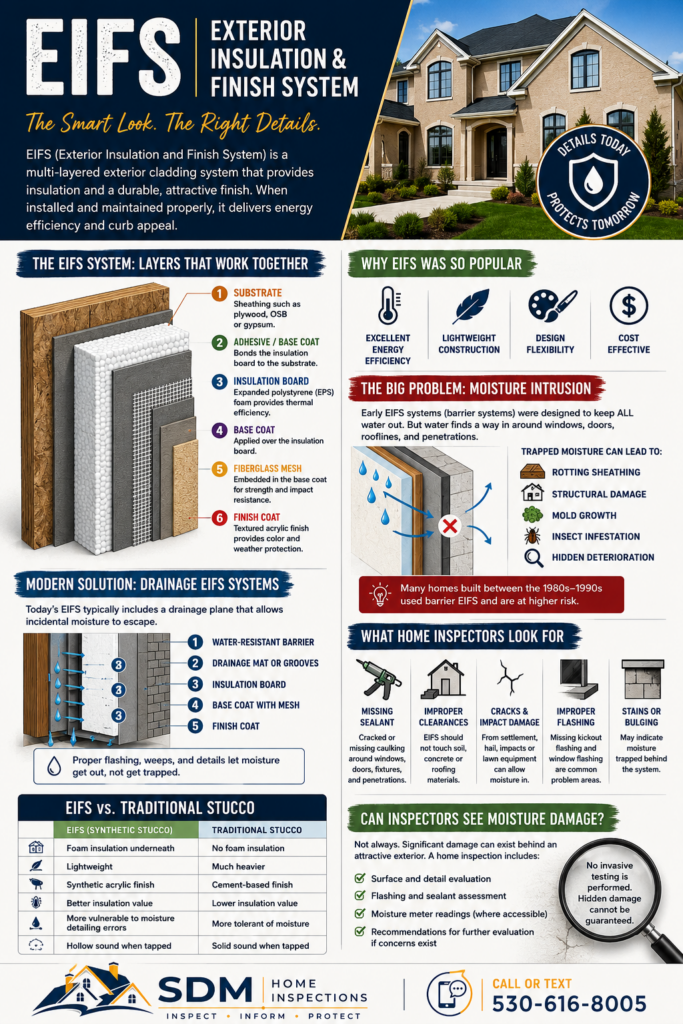
The infographic helps explain EIFS layers, drainage improvements, common inspection concerns, and how EIFS compares with traditional stucco.
How EIFS Is Built
The EIFS System: Layers That Work Together
Sheathing such as plywood, OSB, or gypsum.
Bonds the insulation board or prepares the wall surface.
Foam insulation provides thermal efficiency.
Embedded into the base coat for strength and impact resistance.
Textured acrylic finish provides color and weather protection.
Why EIFS Became Popular
Excellent Energy Efficiency
Continuous insulation can improve thermal performance.
Lightweight Construction
EIFS is lighter than traditional cement-based stucco.
Design Flexibility
Foam can be shaped into decorative architectural details.
Curb Appeal
The finish can create a clean, attractive exterior appearance.
The Big Problem: Moisture Intrusion
Early EIFS systems were commonly designed as barrier systems. The idea was to keep all water out. Unfortunately, water can still find its way in around windows, doors, rooflines, penetrations, deck attachments, and failed sealants.
When moisture becomes trapped behind the foam insulation, damage may remain hidden for years.
Trapped Moisture Can Lead To:
- Rotting sheathing
- Structural damage
- Mold growth
- Insect infestation
- Hidden deterioration behind an attractive exterior
Modern Solution: Drainage EIFS Systems
Modern EIFS systems typically include a drainage plane behind the foam insulation so incidental moisture has a path to escape. These assemblies may include a water-resistant barrier, drainage mat or grooves, proper flashing, and weep details.
The goal is simple: proper flashing, weeps, and drainage details let moisture get out, not get trapped.
- Water-resistant barrier
- Drainage mat or grooves
- Insulation board
- Base coat with mesh
- Finish coat
What Home Inspectors Look For
Missing Sealant
Cracked or missing caulking around windows, doors, fixtures, and penetrations.
Improper Clearances
EIFS should not touch soil, concrete, roofing, or other wet surfaces.
Cracks & Impact Damage
Settlement, hail, impacts, or lawn equipment damage can allow moisture in.
Improper Flashing
Missing kickout flashing and window flashing are common problem areas.
Stains or Bulging
May indicate moisture trapped behind the system.
EIFS vs. Traditional Stucco
| EIFS / Synthetic Stucco | Traditional Stucco |
|---|---|
| Foam insulation underneath | No foam insulation |
| Lightweight | Much heavier |
| Synthetic acrylic finish | Cement-based finish |
| Better insulation value | Lower insulation value |
| More vulnerable to moisture detailing errors | More tolerant of moisture |
| Hollow sound when tapped | Solid sound when tapped |
Can Inspectors See Moisture Damage?
Not always. Significant damage can exist behind an attractive exterior. A standard home inspection is non-invasive and does not guarantee the condition of concealed framing or sheathing.
A home inspection includes visual evaluation of accessible surfaces, flashing and sealant conditions, moisture indicators, and recommendations for further evaluation when concerns exist.
Common Questions About EIFS
Is EIFS the same as stucco?
No. EIFS is a synthetic exterior wall system with foam insulation and acrylic finishes. Traditional stucco is cement-based.
Does EIFS always have moisture problems?
No. Modern drainage EIFS can perform well when properly installed and maintained. Problems are more likely when flashing, drainage, sealants, or clearances are poor.
Can EIFS be repaired?
Yes. Cracks, damaged sealants, and localized issues can often be repaired by qualified EIFS contractors. Concealed moisture damage may require more extensive repairs.
Should I buy a house with EIFS siding?
Many EIFS-clad homes perform well. The key is understanding the installation quality, maintenance history, and whether there are visible signs of moisture intrusion.
Inspector's Note
Homes with EIFS siding require diligent maintenance of sealants, flashings, clearances, and drainage details. Visible surfaces may appear in good condition while concealed moisture damage exists behind the cladding. Monitoring and maintenance are recommended, and further evaluation by a qualified EIFS specialist may be appropriate when concerns are observed.
Concerned About EIFS Siding?
Whether you are buying, selling, or maintaining a home, understanding EIFS can help prevent expensive surprises.
SDM Home Inspections
Call or Text: 530-616-8005
sdmhomeinspect.com