
Pressboard Siding, LP Siding & OSB Siding: What Homeowners Should Know
Older engineered wood siding can last for years when maintained — but moisture damage can become expensive when ignored.
What Are We Talking About?
Pressboard siding, chipboard siding, fiberboard siding, OSB siding, LP siding, and SmartSide are names homeowners often use for a family of engineered wood siding products. Some are older products with a rough history. Others are modern materials that can perform well when installed and maintained correctly.
The big thing to understand is simple: moisture is the enemy. When paint fails, caulking opens up, or bottom edges stay wet, these siding products can swell, delaminate, soften, and decay.
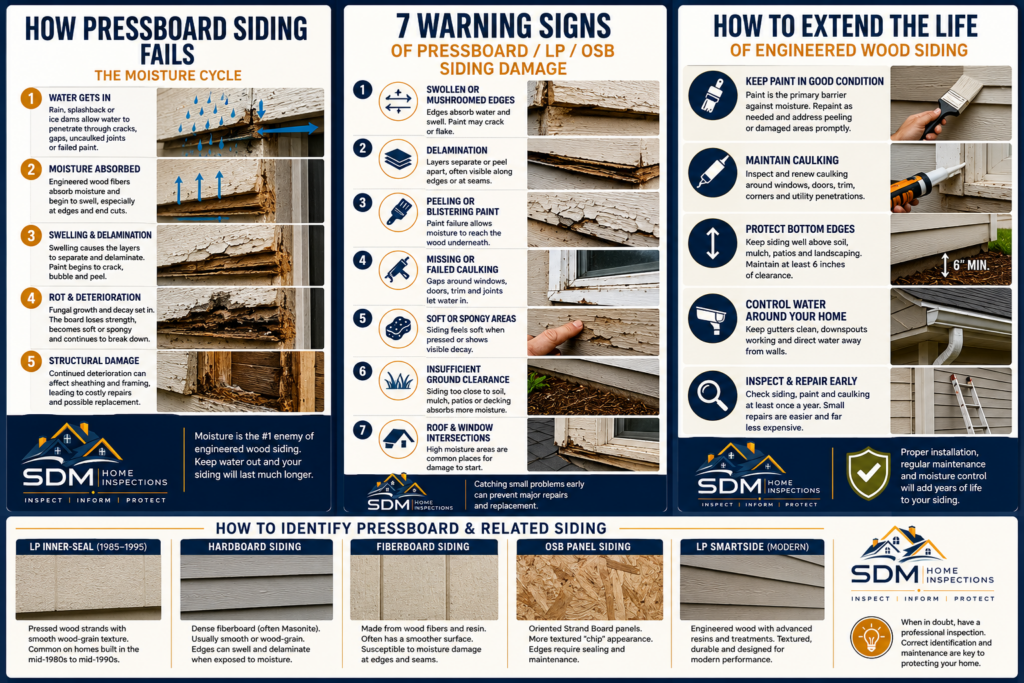
A Brief History
Engineered wood siding became popular as builders looked for less expensive alternatives to traditional solid wood siding. Products made from wood fibers, chips, strands, or pressed materials were marketed heavily from the 1970s through the 1990s.
One of the most recognized names was Louisiana-Pacific Inner-Seal siding, an OSB-based siding product commonly installed from the mid-1980s into the mid-1990s. Many older installations developed moisture-related problems, which eventually led to major class-action litigation and changes in how these products were manufactured and installed.
Modern LP SmartSide is a different generation of engineered wood siding and should not automatically be confused with the older problem products. That said, no siding is maintenance-free. Paint, caulking, clearance, and water control still matter.
Why It Fails
Many failures start quietly. Water gets behind paint, enters an unsealed bottom edge, or soaks into a joint where the caulking has failed. Once moisture reaches the wood fibers, the siding may begin to swell. Over time, the layers can separate, the surface can blister or flake, and decay may develop.
Common damage areas include bottom edges, window trim, door trim, roof-to-wall intersections, areas close to soil or mulch, and places where gutters dump water onto the wall.
Water Gets In
Rain, splashback, ice dams, failed caulking, and open joints allow moisture to enter.
Moisture Is Absorbed
Wood fibers absorb moisture, especially at cut edges and lower edges.
Swelling & Delamination
The material can swell, peel, crack, soften, and lose strength.
7 Warning Signs to Watch For
When inspecting older pressboard, fiberboard, OSB, or LP-type siding, these are the big warning signs.
1. Swollen or Mushroomed Edges
Edges absorb water and may swell, crack, or flake.
2. Delamination
Layers separate or peel apart, often along edges and seams.
3. Peeling or Blistering Paint
Paint failure lets moisture reach the wood underneath.
4. Missing or Failed Caulking
Gaps around windows, doors, trim, and joints let water in.
5. Soft or Spongy Areas
The siding feels soft when pressed or shows visible decay.
6. Insufficient Ground Clearance
Siding too close to soil, mulch, patios, or decking absorbs more moisture.
7. Roof & Window Intersections
High-moisture areas are common places for damage to start.
What to Expect if You Buy a Home With It
Finding older engineered wood siding on a home is not automatically a deal-breaker. Some homes still have serviceable siding because it has been well painted, well caulked, and protected from roof and ground moisture.
However, buyers should expect a careful inspection. Look for swollen or mushroomed edges, soft spots, delamination, peeling paint, open caulk joints, staining, fungal growth, and siding that is too close to soil, patios, decks, or roofing materials.
How to Extend Its Life
- Keep it painted. Paint is the primary moisture barrier.
- Maintain caulking. Check windows, doors, trim, corners, and penetrations.
- Protect bottom edges. Keep siding well above soil, mulch, patios, and decks.
- Control roof water. Keep gutters clean and downspouts extended away from the home.
- Repair small issues early. Small repairs are much easier than full siding replacement.
Annual Checkup
Look closely at paint, caulking, edges, trim, and drainage at least once a year.
Keep Water Moving Away
Roof runoff, sprinklers, and splashback should not repeatedly wet siding.
Fix Early
Small siding repairs are usually far less expensive than large-scale replacement.
The Bottom Line
Older engineered wood siding deserves careful attention, but it does not automatically mean the home is in poor condition. The real questions are: has it been protected from moisture, has it been maintained, and is there visible deterioration now?
If you are buying a home with pressboard, LP, OSB, fiberboard, or engineered wood siding, a thorough home inspection can help you understand what you are dealing with before it becomes your problem.